Florida Buttercup Meets GC Ewe

20 11 2009

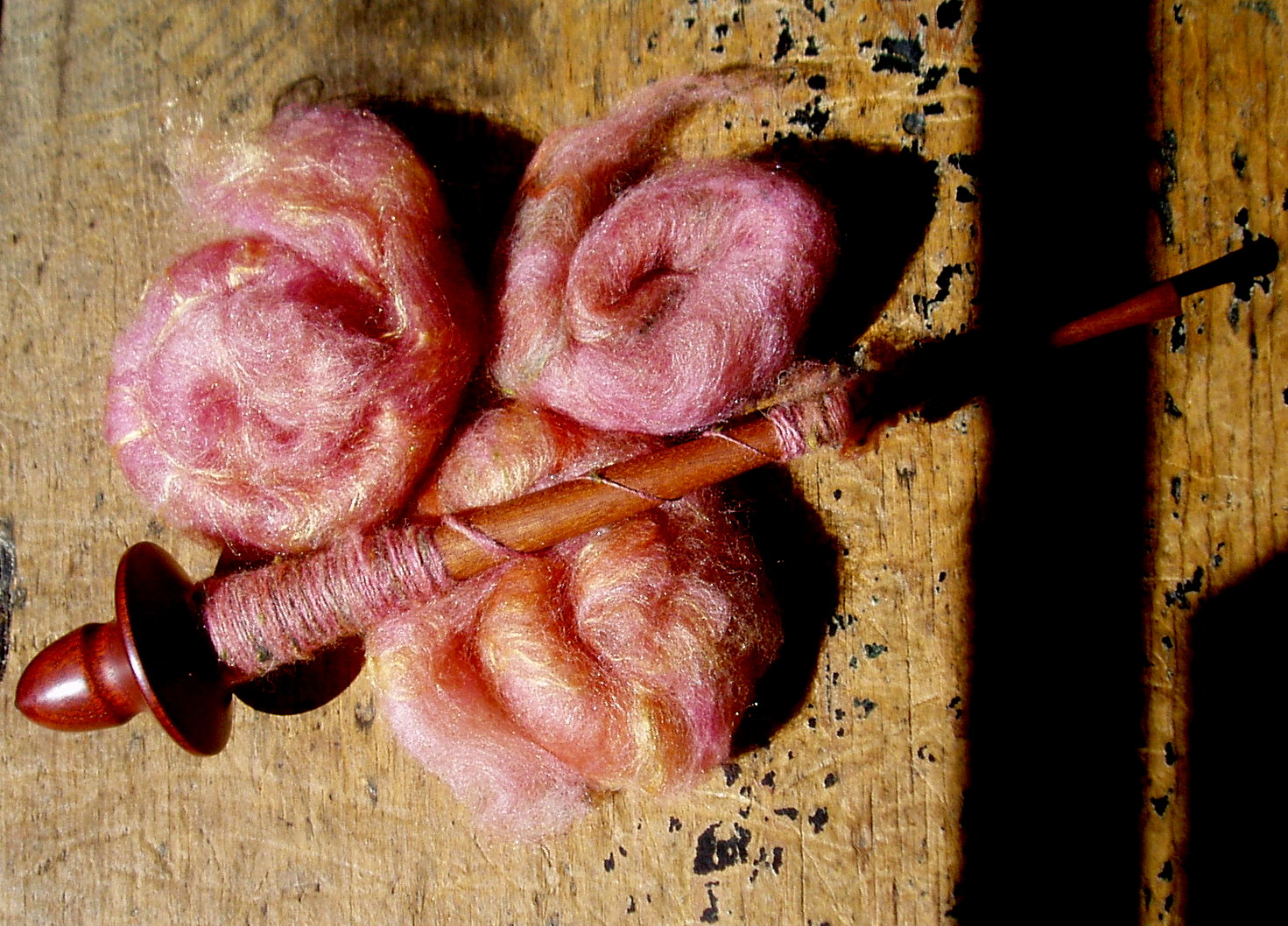
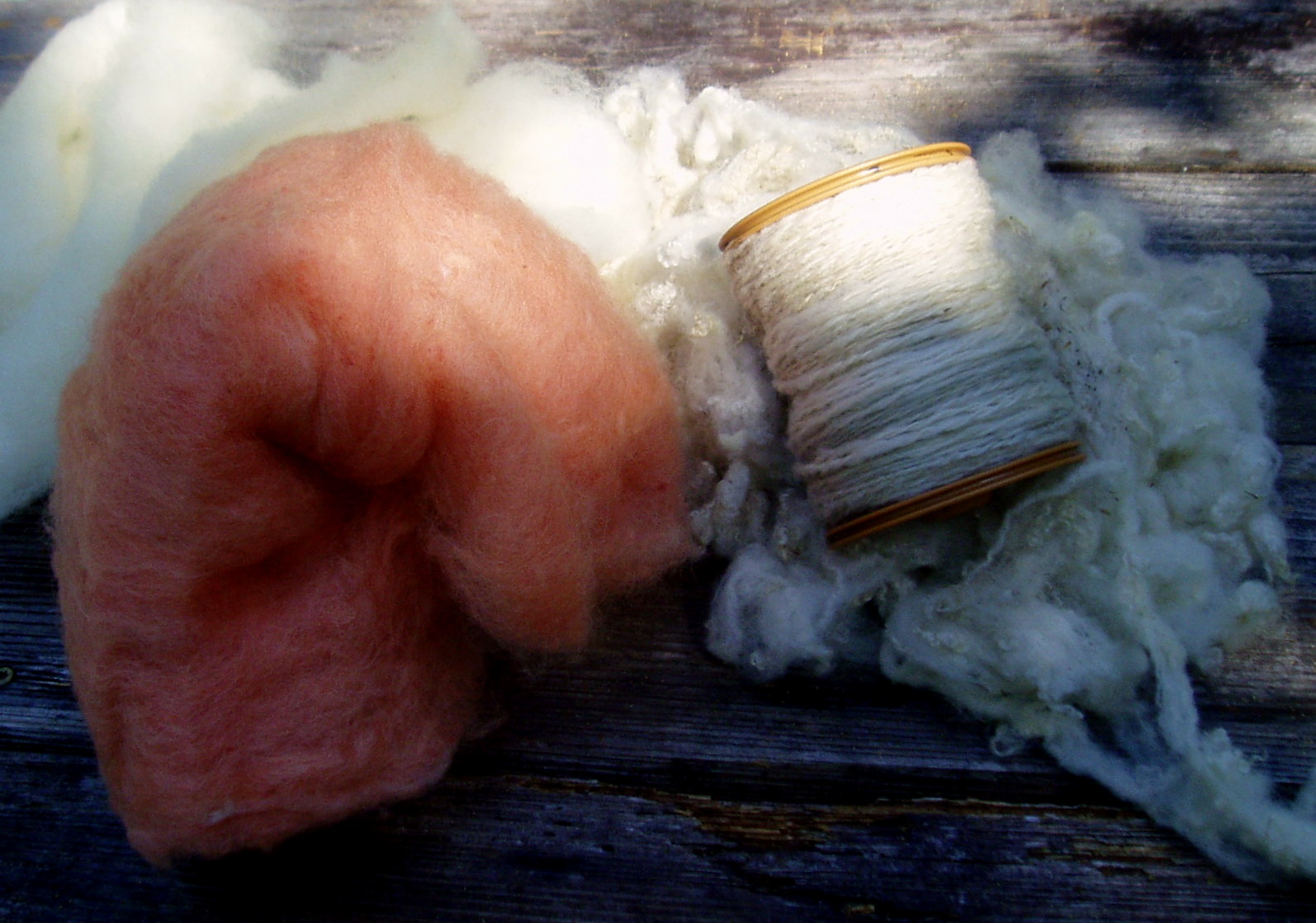
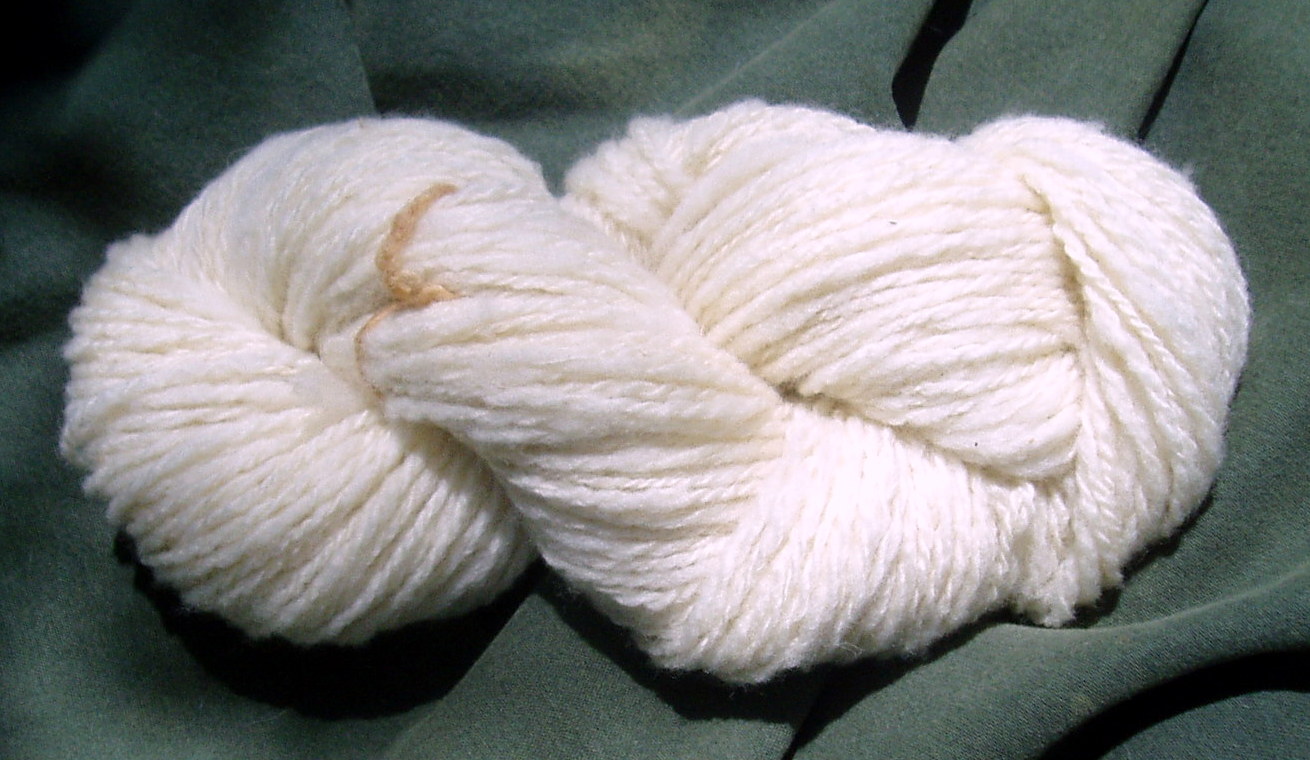
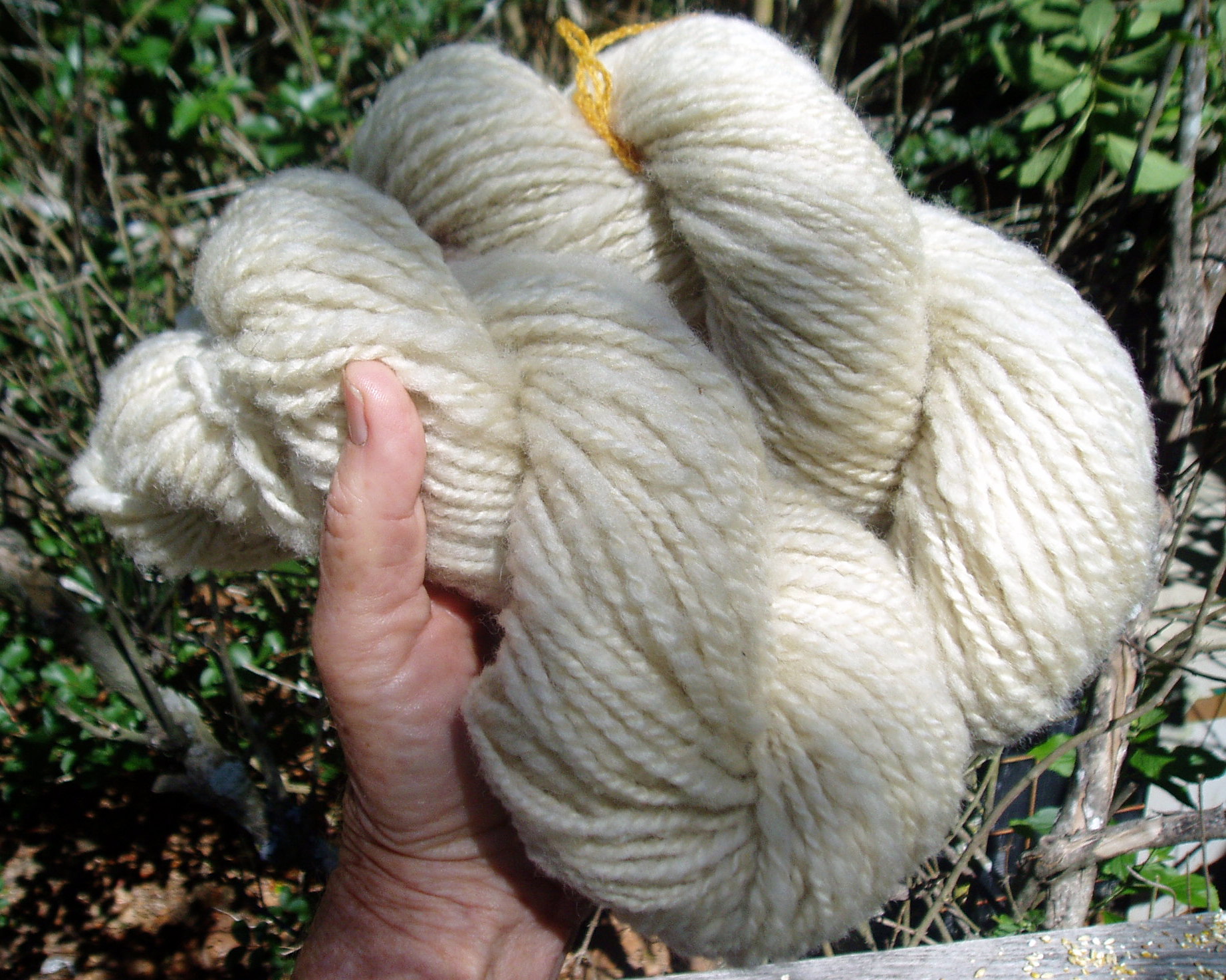
This dye job was a complete surprise. About a month ago, the fields were just full of masses of a tall weed with teeny yellow blossoms. The golden fields were too pretty to cut. At the end of their blooming, I decided to throw some in a dye pot to see what would happen. This intense cinnabar green is what happened. A dusky yellow verging on green. Oh Yum!

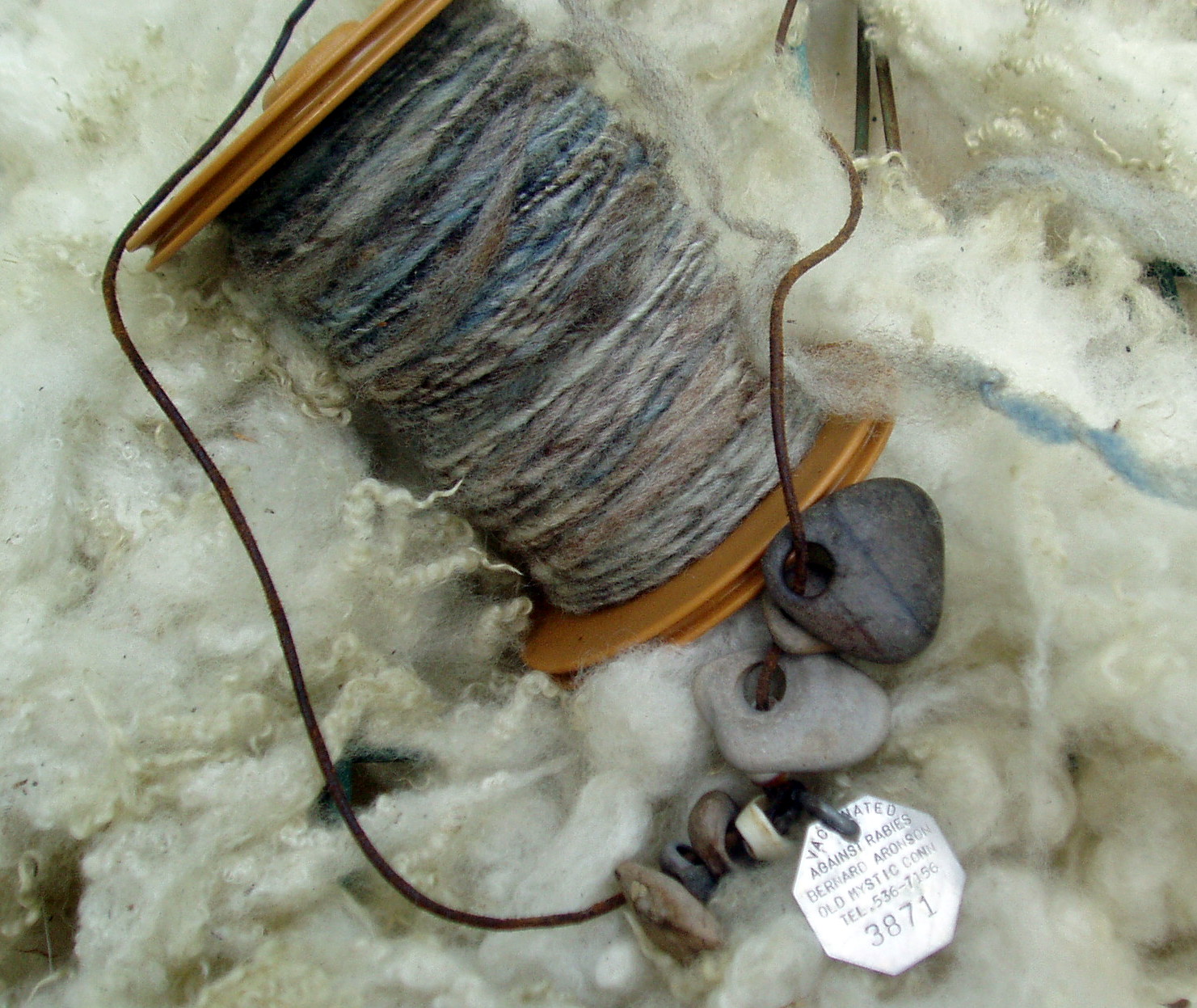
Here’s the start of something good…I’m thinking a fine 2-ply would be just the ticket. And what’s left will get spun into some bulky wacky hat yarn!


Autumn Yarn

20 11 2009

“Autumn” – 2-Ply Bulky Naturally Dyed Gulf Coast Native

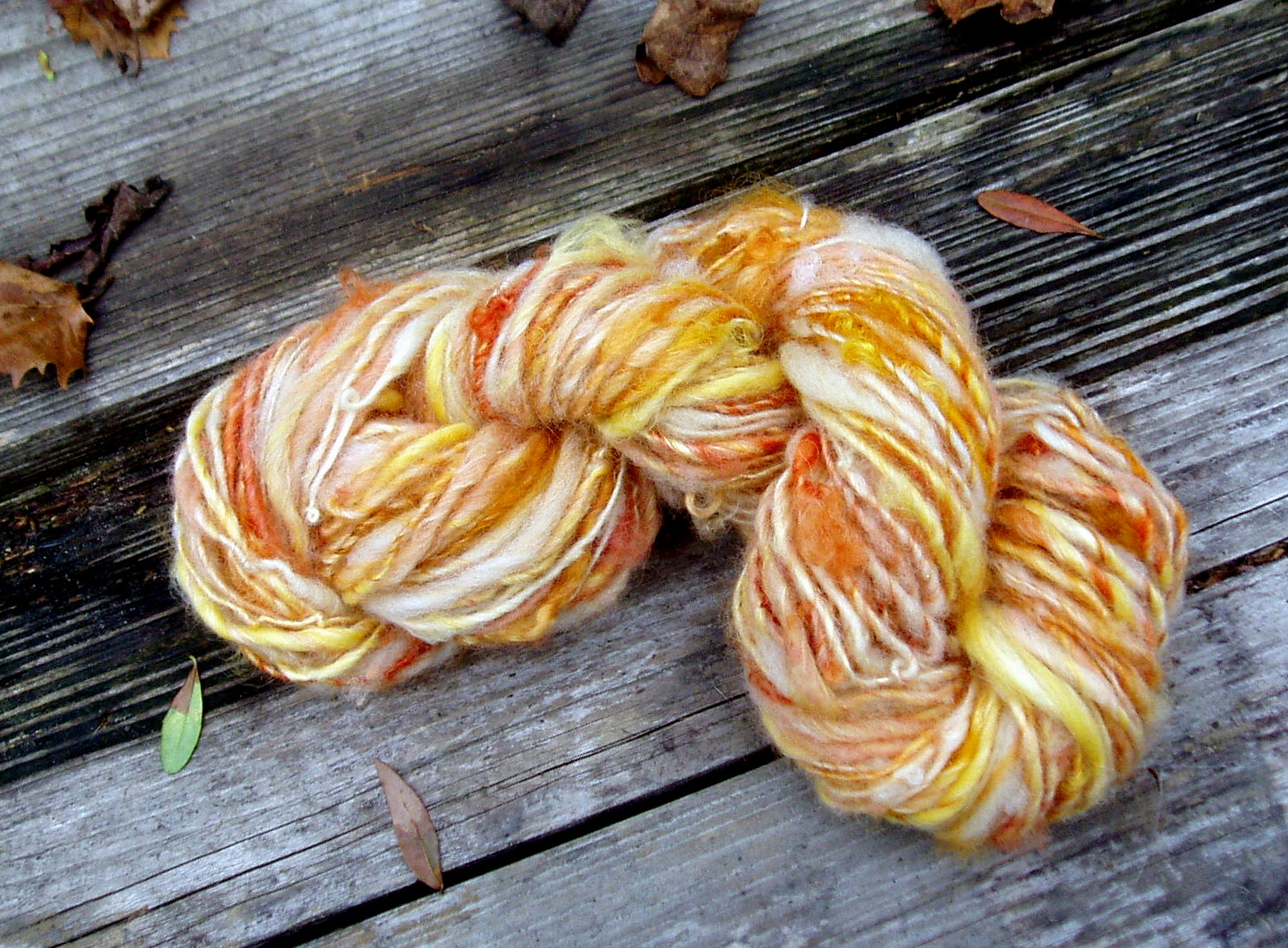
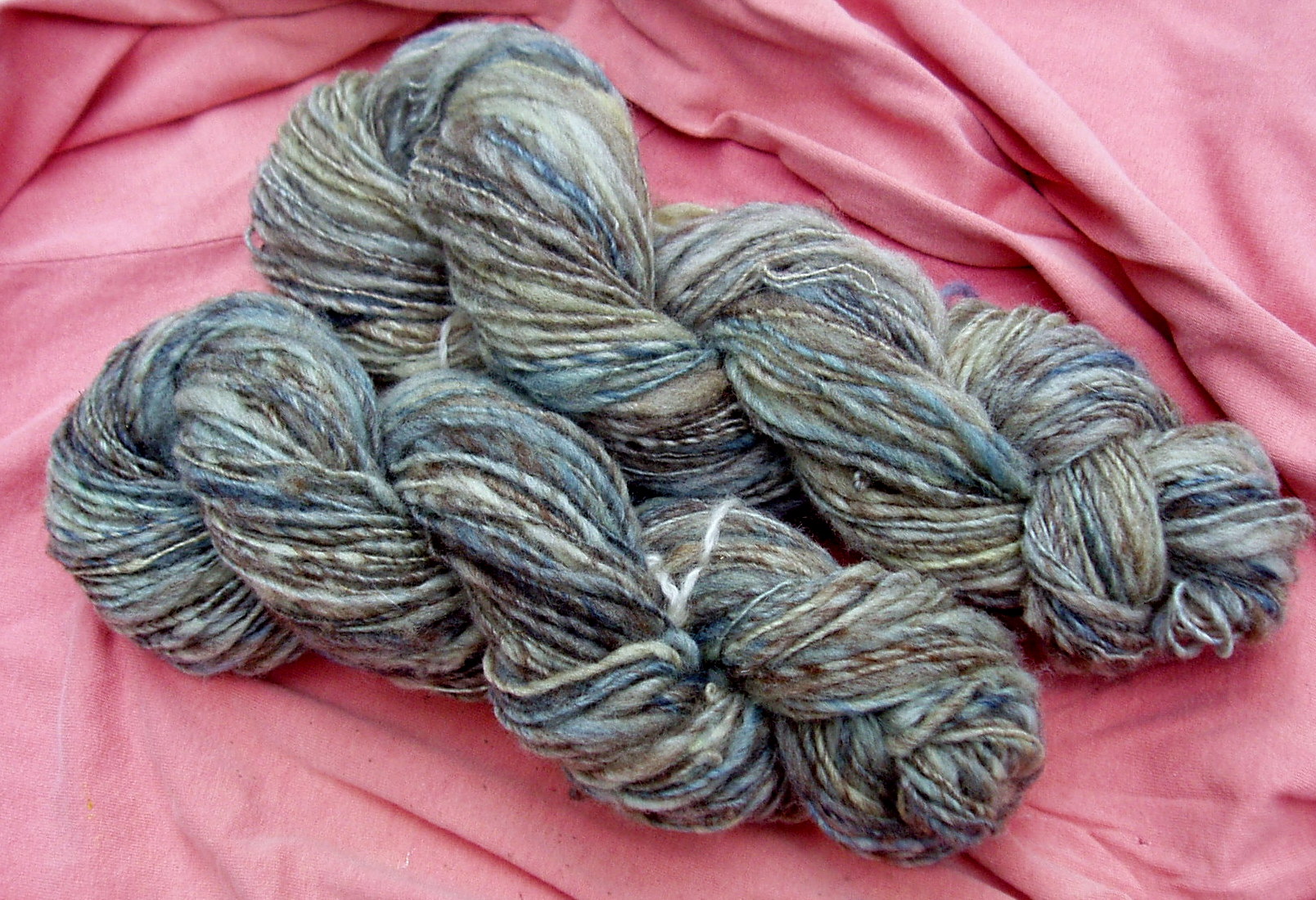
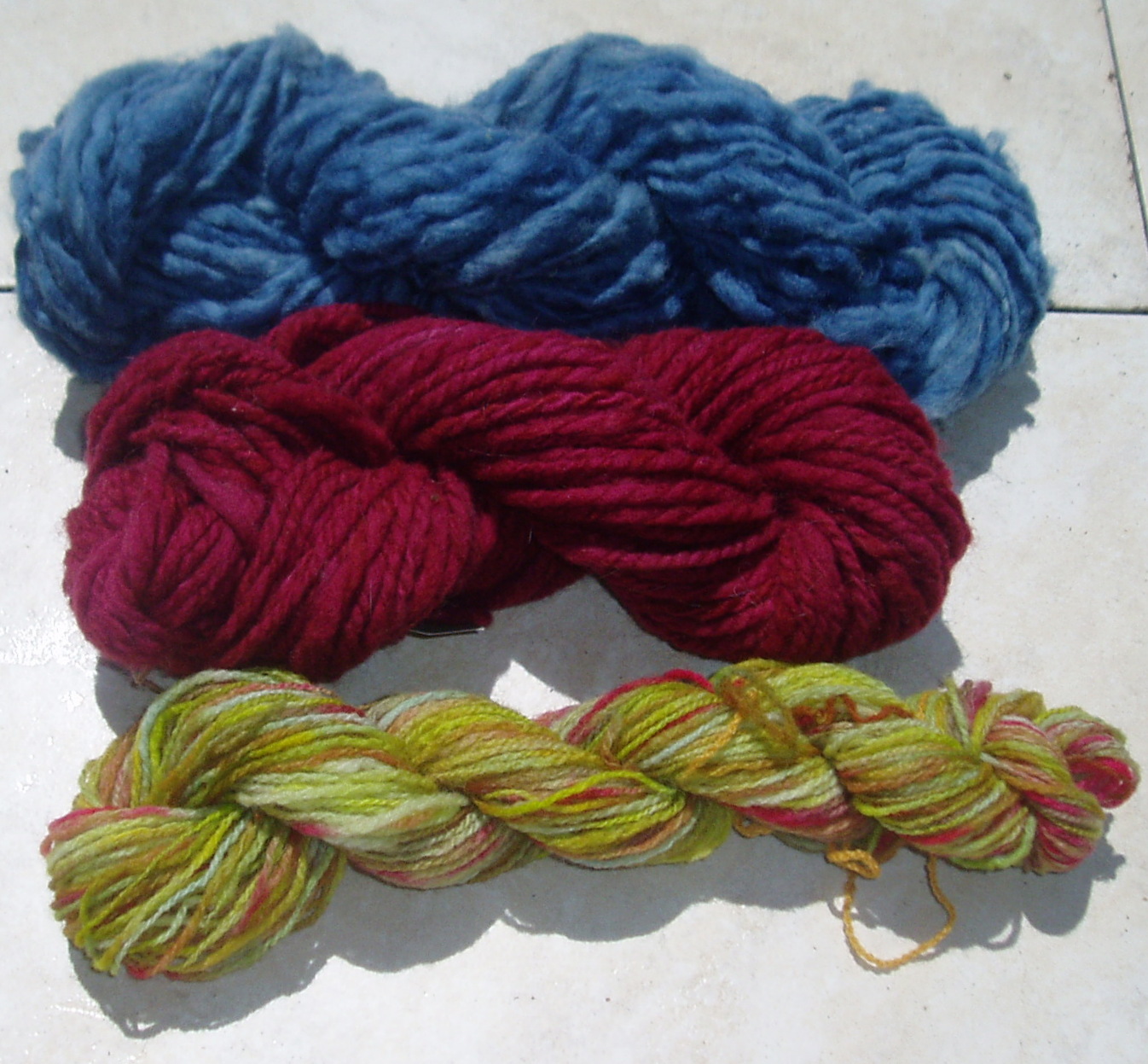
Here’s a sweet skein of yarn. This is destined for a hat kit. I’ve been tweaking the “Ray’s Hat” pattern. It looks great on all kinds of heads. This yarn is spun from Gulf Coast fleece dyed with roselle, basil, cosmos, coreopsis, and some natural brown is in there too. This will be an amazing hat.


Ray’s Hat

20 11 2009

Ray’s Hat

The task was to knit a fast, easy hat from a typical skein of chunky handspun. This started off as a gauge swatch for a sweater being commissioned from a yarn I spun last April (Ray’s). Of that skein, this hat took about 60 yards and 2 hours on size 9 needles.


Dark for The Duke

15 10 2009

dukedarkgcni

Coreopsis Dyed GCNI: Fine Singles for Sanquhar Knitting

Sanquhar Knitting is traditional regional Scottish knitting. The town of Sanquhar is in SW Scotland, and its knitters are responsible for some fine patterns/designs that may be related to woven designs. The knitting is done with fine yarn on fine needles.

Recently, a group was formed on, wouldn’t you know, Ravelry. Patterns were ordered from SWRI (Scottish Women’s Rural Institute) and sent to some of the group members. These are glove patterns. This type of knitting is often done in black and white in order to show off the fine geometric designs. Here’s a link to Future Museum, where you can get a good look at the gloves we’re making.

Granted, this is not black yarn…however it is my native yarn, overdyed with my state flower. I’m using a fine natural cream single as the counterpoint.


Flowers & Fleece

14 10 2009

natdyedgc

Holly – Gulf Coast, Amber – GCNI, and a Border Leicester Wearing Flower Dye

Clockwise from left: Gulf Coast Dyed with Coreopsis, Purple Ruffles Basil, Goldenrod, and GCNI with Coreopsis. (Border Leicester locks in Basil and Coreopsis on Right.)

These fibers were all dyed in the locks. Holly’s fleece was washed using the fermented suint method, so there is a good deal of lanolin in the wool. The wool took the dye just fine. Amber, the GCNI, as well as the Border Leicester locks were washed with no soap Vet shampoo prior to dyeing.


The behinder I get…

9 10 2009

roselle 1b

Roselle – aka Florida Cranberry

This picture was taken exactly one month ago. I can’t seem to get myself in synch. Here you can see the hibiscus-like flowers and little buds rising from the stem. Wait’ll you see how the plant looks now!

This plant is, officially, my favorite plant. Here are things you can do with this plant: 1) eat the leaves – in France, this plant is called sorrel; in fact, the leaves taste just like sorrel, 2) make tea with the calyces – just like rose hip tea, 3) make jelly with the calyces – yum yum, 4) make a jellied “sauce” like cranberry sauce with the calyces, 5) make dye with the spent flowers, 6) make fiber – yes roselle is a bast plant! Quite a lot of bang for the ol’ buck, yes?

sesame sept

Kurogoma – Black Sesame

Back in August, TT gave me some seeds at the downtown farmers market. They were black sesame seeds. Of course, we couldn’t wait. Planted 6 of them. The all germinated. A month ago, this is how Miss Sesame looked. Great little flowers! Now…well. The seedpods are – well…I have to take more pictures tomorrow.

I suppose I should be taking pictures of the wonderful sandspurs that Sally and Holly have discovered. My fingers are bruised and sore from picking the damn things out of their fleece. No. I’m not dignifying the sandspur with a photo.

I have some exciting actual fiber things to show, too. All weekend, I prepped fleece. Washed, mordanted, dyed…mmm. And now…I’m in the carding and roving pulling process. Next time…


Hello Fall, Goodbye Coreopsis

3 10 2009

coreopsis103

My stand of coreopsis was reduced to 3 or 4 spindly, hacked up plants around the terra cotta chicken fountain. The hennys did a pretty good job of dismembering said stand. So, I was reduced to trolling the county roads. My very own personal county road, also called 232, was loaded with the 3rd blooming 2 weeks ago. I had not had time all summer long to even pull over and snip some blossoms. So, this was it. I made sure I had a big ol trash bag with me whenever I went out. And finally, I said to myself, “Today’s the day.”

I set out for the feed store, expecting to see masses of yellow flowers, but when I turned out onto the road, all I saw was new mown grass. A mile later…5 miles later…8 miles later, there was a tractor, mowing ‘em down. I turned onto 27. Tractors mowing everywhere. It was one of those early fall days, you felt you could be outside, I guess. I got the feed. Not a flower in sight. Decided to take an alternate route home. And there, by the bottling plant near the springs, OH HA! The Last of the Coreopsis.

So there you go. I mordanted a variety of fiber…some of Holly’s hoggett fleece from last April’s shearing, some fine GCNI from a sheep in Dry Creek, Louisiana, some Border Leicester from Maryland. Then I made a dyepot with half of those coreopsis. The result…not intense oranges, but milder, softer shades. I’m totally delighted with the “overdye” effect on the gray GCNI. I want to wear THAT.

greencotton

Here’s a close up, sans flash, of this season’s green cotton. We had quite a time with cotton this year. Permitted by the state, boll weevil trap planted in the garden by the Division of Plant Industry, and inspected by Wayne every three weeks this summer.

This is our 2nd year of growing cotton. We planted only green. I selected bolls with the darkest fiber, and was pleased with the outcome. Most of the cotton is medium green. Last year’s batch was all over the green spectrum…but mostly very very pale.

beauberryssm

These are beautyberries. An entirely different color.  Pretty intense. I’ve been cutting stems and making wild bouquets with goldenrod. For years. Well, this year, I heard tell of a jelly made from beautyberry. Lenore, daring wench that she is, went first. She found “the mother lode” on her 10 acres. She was so daring she even added wine. Well. I tasted her jelly. I tasted the berries. I knew I had to make some.

Lenore the Enabler showed up at the farmers market with a big fat bag of berries. Almost enough for the “recipe.” On one of Smitty’s morning sojourns, I picked enough to make enough jelly for the Western World. I didn’t add wine. Just berries, pectin, and sugar.

beautyberrysm

Here you go. Five half-pints of jelly. Scarlet jelly. Now, how did that happen? The violet berries produced an amber colored juice. When the pectin hit…instant color change! I’d never used pectin before, so I didn’t know what to expect. The jelly set right up…ka-boom! Heck in a handbasket, it’s just like store-bought. Except it tastes herbal, wild, and like nothing that Publix would ever carry. Yum.

Thanks Lenore!

Oh…and the recipe…should anyone out there care to dare:

1 1/2 qts beautyberries
2 qts water
1 pkt pectin
4 1/2 c sugar

Start a boiling water canner rolling. Prepare 5 1/2 pt jars, lids, and bands.

Rinse and pick over berries. Ditch the stems. Cover the berries with the water. Bring to a boil…let boil for 20 minutes. Mash the berries a bit. Strain.

Use 3 c of the berry juice. (You’ll have another 3 c left to refrigerate to make more at a later date.) Bring the juice to a boil. Whisk in an envelope of pectin. (I used Ball brand.) As it boils, whisk in the sugar (all at once) and bring a 2nd boil. Let it boil hard for a minute.

Remove from heat. Skim off the “stuff” on top. Pour into sterilized 1/2 pt jars with 1/4″ headspace. Process for 10 minutes.


What?

30 06 2009

gillyslub yarn


Familiar?


Tom & Gracie

30 06 2009

A few months ago, a fleece from a sheep named Gracie came to live with us. Gracie is a CVM/Romney, and she is so dark brown and soft…ooh, I really can’t describe. When Tom saw the fleece sample, his mouth opened and the words, “that’s my sweater,” came out. So. Gracie came home.

Designing a sweater for a guy is not really simple. Not if the guy wants to actually wear the sweater. Not if you want the guy to actually love the sweater you design for him. So, it took some doing. I’ve been through all the books. We talked about necks and ribbings, shoulders and textures. Ad infinitum. A woman in one of my Ravelry groups sent me an old Knitter’s magazine with an Elizabeth Zimmerman sweater. Good thought. But, no. However, there were elements of the “right” sweater there, and in another sweater in that old magazine.

Gracie Sweater Pattern

The Swatch, the Needles, the Sweater Pattern, and the Cartoon

I had already spun a 20 yd sample of 12wpi 2-ply, thinking that would be about the right weight and spring for a sweater. And as soon as I had a chart for the allover design, I knitted a swatch. It’s fairly hard to see here, but…

Gracie Swatch 1

The Successful Swatch

So, with 4 1/2 lbs of Gracie in the box, I set about deciding how best to wash her. I usually do a cold scour, but there has been so much talk about the Fermented Suint Method (FSM), that I decided to try that. In FSM, a fleece is soaked in room temperature water for a week. Just left to stew in its own juices. The water gets brown, opaque, practically flocculates, a slick of weird stuff forms on the top, oh…and it stinks. Does that make you want to try it? After that week, the fleece gets rinsed…I shot it with a hose…until the water runs clear. Guess what? The fleece comes out soft, locks intact, just swell! And it doesn’t stink. The best part is, or the most fun part, or the most really hard to get over part…is that that nasty dirty looking water is then reused, for more fleece. Yes. Just drop another fleece in…and in two days…that fleece is clean. Potassium salts from the suint do the trick. VM is loosened up, barnyard gunk drops out, pasty ends open up. It’s the closest thing to magic you will ever see in fleece washing land. The best part is…there is no soap, no stress about felting…no worries.

gracie in the tub

Gracie in the Tub – FSM Style

After the successful washing of Gracie, I started the process of carding. Carding and pulling roving.

Gracie Roving a

Gracie Roving

Here’s a bit of the roving I’ve been pulling. We played a dance in Tampa the other night, and I carded and pulled for a couple of hours during the drive between Gainesville and the Rhapsody Ballroom. When we got to the dance, I showed a woman my little project. She rubbed her cheek against it, and proclaimed, “feels like cashmere.” Enough said.


Fleece Study, Part I

23 06 2009

navajochurro fleecestudy

Navajo Churro, Cold Soaked for 6 Days

The Raw Wool Lovers, Unite group on Ravelry has been having a Fleece Study. Alice, aka shortsheepshepherd, has coordinated the purchase and distribution of a whole pile of fleeces…a variety of breeds. Last month, we received our first “installment” of 4 samples.

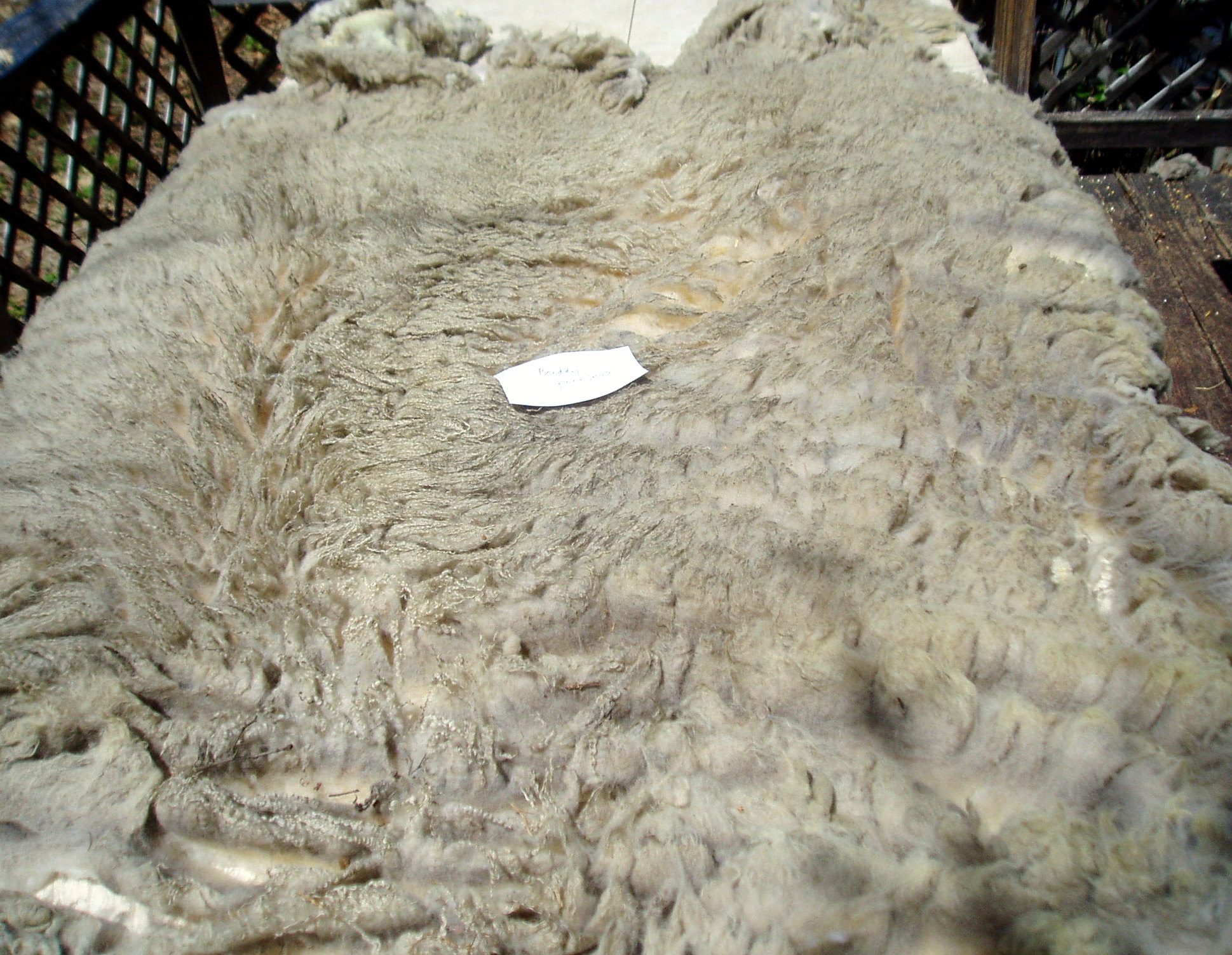
Fleece #1 Navajo Churro, was soaked for 6 days in a tub of cold water. I drained it and sprayed down the fleece when I got an algae bloom. The fiber is fairly coarse, but after the weeklong soak, it’s very clean, with a bit of grease…that, for me, is good for spinning.

navajochurro locks after cold soak

Navajo Churro Locks, Ready to Card

I pulled off some clean locks from the pile of fluff. This stuff is long! I did card a small batt and it’s just lovely.

For the record, this fleece came from breeder Golden Ridge Farm in Vesuvius, Virginia.